
"My son has ADHD. Will he be able to keep up?"
"My daughter gets really anxious in new situations. Is jiu jitsu going to be too much for her?"
We hear versions of these questions from Longmont parents almost every week. They're good questions. Here's my honest answer: for a lot of kids with ADHD or anxiety, jiu jitsu is one of the best-fitting activities they'll ever try. Not because it's magic, and not because it replaces anything your child's doctor or therapist recommends. It's because of how the sport is built.
Let me explain what I mean, what the research actually says, and how to tell if it's right for your kid.
Quick note: I'm a coach, not a doctor. Nothing here is medical advice. Jiu jitsu works best as one healthy part of your child's life, alongside whatever care plan you and their providers already have.
Why jiu jitsu fits kids with ADHD
A lot of activities ask kids with ADHD to do the thing that's hardest for them: sit still and wait. Stand in the outfield for 20 minutes. Listen to a long explanation before you get to move.
Jiu jitsu flips that around.
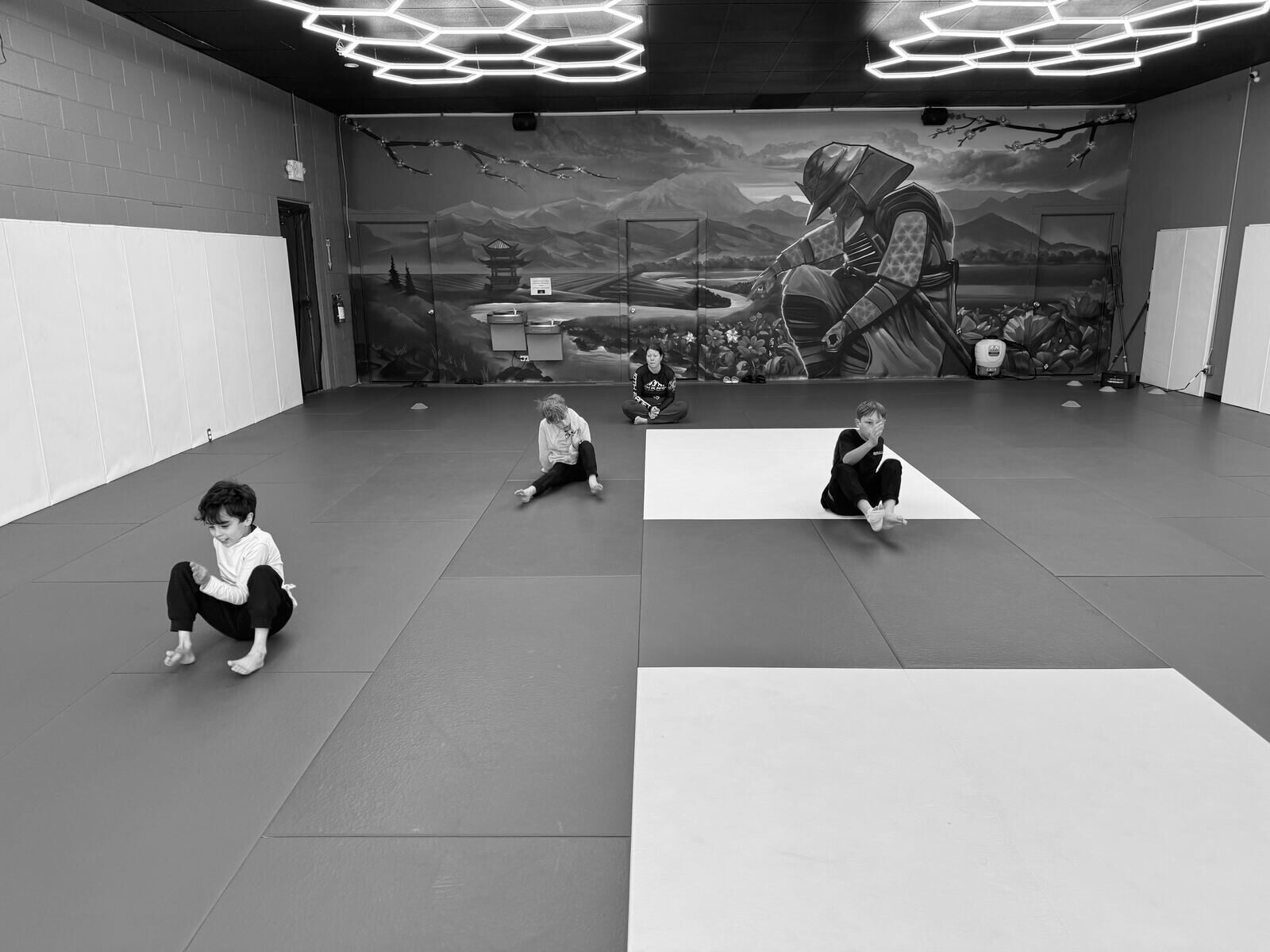
- Kids are moving almost the whole class. Warm-ups, drills, games and live rounds come in short, active chunks. There's very little standing around.
- Instruction comes in small pieces. A coach shows one move, kids try it right away with a partner, then the coach adds the next piece. Short explanations, lots of reps.
- The feedback is instant. In jiu jitsu, your body tells you right away whether a technique worked. You don't have to wait for a score or a grade. That immediate feedback is really engaging for kids whose brains crave it.
- It takes their full attention, in a good way. When a partner is trying to hold you down, it's hard to think about anything else. A lot of parents tell us this is the one place their kid is completely locked in.
- It's a workout. Kids leave class tired in the best way. Plenty of parents notice a calmer evening after training.
What the research says about ADHD
The research on martial arts and ADHD is still young, but it's encouraging. One of the best-designed studies so far was a randomized controlled trial published in 2022. Researchers had children ages 8 to 12 with ADHD do judo, a grappling art closely related to jiu jitsu, twice a week for 12 weeks. Compared with a wait-list group, the judo kids showed improved working memory, the mental "notepad" kids use to hold instructions in their heads and follow through.
It was a small study, and every child in it was already on ADHD medication, so it doesn't prove jiu jitsu works for everyone. But it's a strong signal that structured grappling training can build some of the exact skills kids with ADHD work hardest on.
Why jiu jitsu fits kids with anxiety
Anxiety often comes from feeling out of control, or from not knowing what to do when something uncomfortable happens. Jiu jitsu gives kids practice at exactly that, in small, safe doses.
- They practice staying calm under pressure. Being on the bottom with a partner on top of you is uncomfortable. In jiu jitsu, kids learn they can breathe, think and work their way out. Over months, "this is uncomfortable" stops meaning "I'm in danger."
- Confidence comes from doing, not from being told. You can tell an anxious kid they're brave a thousand times. Or they can escape from a bigger partner, again and again, and know it. Real confidence is built that second way.
- Tapping teaches them they're in control. In jiu jitsu, any partner can tap at any time and the action stops instantly. Every kid learns from day one that they have a voice and it will be respected.
- The routine is predictable. Same warm-up, same structure, same coaches, same faces. For an anxious kid, knowing what comes next lowers the stress of showing up.
- It's a place to belong. A lot of anxious kids struggle to make friends. On the mats, they partner up with other kids every class, and friendships happen naturally.
What the research says about anxiety
Here I'll be extra honest: the research on martial arts and childhood anxiety is mixed. A 2025 systematic review of controlled trials found improvements in areas like social-emotional skills and executive function for kids training in judo and karate, with occasional gains in self-esteem and stress management. On the other hand, a large 2009 study that followed thousands of school kids found no overall link between martial arts and teacher-reported behavior or anxiety.
The researchers behind that second study made a point I agree with: instruction varies a lot from school to school. The benefits depend heavily on how a class is run. That's why the coaching environment matters as much as the sport itself.
What makes a good fit (and what to watch for)
Not every martial arts class is the right environment for a kid with ADHD or anxiety. Here's what I'd look for anywhere you visit, including our gym:
- Classes split by age. A 4-year-old and a 10-year-old need very different things. Our kids program is split into Tots (ages 3–5), Kids (ages 6–10) and Pre/Teen (11+).
- Coaches who stay patient and positive. Kids with ADHD will get distracted. Anxious kids will hesitate. Good coaches redirect without shaming.
- Clear rules and a consistent structure. Every class should follow a predictable flow.
- Controlled sparring. Live rounds should be supervised, matched by size and experience, and built up gradually.
- No pressure on day one. Your child should be able to ease in.
It's also worth being realistic. Some kids click on the first day. Others need a few weeks before they settle in. A rough first class doesn't mean jiu jitsu isn't for your child. Consistency over months is where the real benefits show up.
Tips for your child's first class
- Tell the coach a little about your child. You don't have to share anything you're not comfortable with. Even "he gets distracted easily" or "she's nervous with new people" helps us set them up to succeed.
- Arrive 10 minutes early. A few minutes to see the room, meet a coach and get comfortable makes a big difference for anxious kids.
- Stay and watch. Parents are welcome to watch from the side, especially for the first few classes.
- Keep expectations low and praise effort. "You tried something new today" is a huge win.
- Dress them in comfortable athletic clothes. 10th Planet is 100% no-gi, so there's no uniform to buy. A t-shirt and shorts or leggings is perfect.
Try a free kids class in Longmont
The best way to find out if jiu jitsu fits your child is to let them try it. Their first class is free, with no experience needed and no pressure to sign up.
Check the class schedule for Tots, Kids and Pre/Teen times, read more about our kids programs, or grab our free Parent's Guide to Kids Jiu Jitsu. When you're ready, book a free trial and one of our coaches will reach out to help you pick the right class.
Still deciding? These might help: What's the Best Age to Start Kids Jiu Jitsu? and Jiu Jitsu vs. Karate for Kids.
We're on Hover Street in north Longmont and see families from Niwot, Mead, Firestone & Frederick and Erie.
See you on the mats!